
The outbreak of Pontiac's War in May 1763 led to the Royal Proclamation of 1763 and the added duty of British soldiers to prevent outbreaks of violence between Native Americans and American colonists. 10,000 British troops were dispatched to the American frontier, with a primary motivation of the move being to provide billets for the officers who were part of the British patronage system. John Adams wrote disparagingly of the deployment, writing that "Revenue is still demanded from America, and appropriated to the maintenance of swarms of officers and pensioners in idleness and luxury".
George Grenville became prime minister in April 1763 after the failure of the short-lived Bute Ministry, and he had to find a way to pay for this large peacetime army. Raising taxes in Britain was out of the question, since there had been virulent protests in England against the Bute ministry's 1763 cider tax, with Bute being hanged in effigy. The Grenville ministry, therefore, decided that Parliament would raise this revenue by taxing the American colonists without their consent. This was something new; Parliament had previously passed measures to regulate trade in the colonies, but it had never before directly taxed the colonies to raise revenue.
Politicians in London had always expected American colonists to contribute to the cost of their own defence. So long as a French threat existed, there was little trouble convincing colonial legislatures to provide assistance. Such help was normally provided through the raising of colonial militias, which were funded by taxes raised by colonial legislatures. Also, the legislatures were sometimes willing to help maintain regular British units defending the colonies. So long as this sort of help was forthcoming, there was little reason for the British Parliament to impose its own taxes on the colonists. But after the peace of 1763, colonial militias were quickly stood down. Militia officers were tired of the disdain shown to them by regular British officers, and were frustrated by the near-impossibility of obtaining regular British commissions; they were unwilling to remain in service once the war was over. In any case, they had no military role, as the Indian threat was minimal and there was no foreign threat. Colonial legislators saw no need for the British troops
The Sugar Act of 1764 was the first tax in Grenville's program to raise a revenue in America, which was a modification of the Molasses Act of 1733. The Molasses Act had imposed a tax of 6 pence per gallon (equal to £5.24 today) on foreign molasses imported into British colonies. The purpose of the Molasses Act was not actually to raise revenue, but instead to make foreign molasses so expensive that it effectively gave a monopoly to molasses imported from the British West Indies. It did not work; colonial merchants avoided the tax by smuggling or, more often, bribing customs officials. The Sugar Act reduced the tax to 3 pence per gallon (equal to £2.24 today) in the hope that the lower rate would increase compliance and thus increase the amount of tax collected. The act also taxed additional imports and included measures to make the customs service more effective.
American colonists initially objected to the Sugar Act for economic reasons, but before long they recognized that there were potential constitutional issues involved. The British Constitution guaranteed that taxes could not be levied without the consent of Parliament, but the colonists argued that due to their theoretical Rights as Englishmen, they could not be taxed without their consent, which came in the form of representation in Parliament. The colonists elected no members of Parliament, and so it was seen as a violation of their Rights for Parliament to tax them. There was little time to raise this issue in response to the Sugar Act, but it came to be a major objection to the Stamp Act the following year
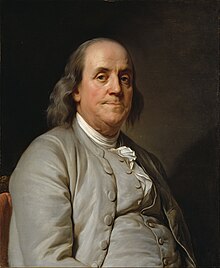
Parliament announced in April 1764 when the Sugar Act was passed that they would also consider a stamp tax in the colonies. Opposition from the colonies was soon forthcoming to this possible tax, but neither members of Parliament nor American agents in Great Britain (such as Benjamin Franklin) anticipated the intensity of the protest that the tax generated.
Stamp acts had been a very successful method of taxation within Great Britain; they generated over £100,000 in tax revenue with very little in collection expenses. By requiring an official stamp on most legal documents, the system was almost self-regulating; a document would be null and void under British law without the required stamp. Imposition of such a tax on the colonies had been considered twice before the Seven Years' War and once again in 1761. Grenville had actually been presented with drafts of colonial stamp acts in September and October 1763, but the proposals lacked the specific knowledge of colonial affairs to adequately describe the documents subject to the stamp. At the time of the passage of the Sugar Act in April 1764, Grenville made it clear that the right to tax the colonies was not in question, and that additional taxes might follow, including a stamp tax.
The Glorious Revolution had established the principle of parliamentary supremacy. Control of colonial trade and manufactures extended this principle across the ocean. This belief had never been tested on the issue of colonial taxation, but the British assumed that the interests of the thirteen colonies were so disparate that a joint colonial action was unlikely to occur against such a tax–an assumption that had its genesis in the failure of the Albany Conference in 1754. By the end of December 1764, the first warnings of serious colonial opposition were provided by pamphlets and petitions from the colonies protesting both the Sugar Act and the proposed stamp tax.
For Grenville, the first issue was the amount of the tax. Soon after his announcement of the possibility of a tax, he had told American agents that he was not opposed to the Americans suggesting an alternative way of raising the money themselves. However, the only other alternative would be to requisition each colony and allow them to determine how to raise their share. This had never worked before, even during the French and Indian War, and there was no political mechanism in place that would have ensured the success of such cooperation. On 2 February 1765, Grenville met to discuss the tax with Benjamin Franklin, Jared Ingersoll from New Haven, Richard Jackson, agent for Connecticut, and Charles Garth, the agent for South Carolina (Jackson and Garth were also members of Parliament). These colonial representatives had no specific alternative to present; they simply suggested that the determination be left to the colonies. Grenville replied that he wanted to raise the money "by means the most easy and least objectionable to the Colonies". Thomas Whately had drafted the Stamp Act, and he said that the delay in implementation had been "out of Tenderness to the colonies", and that the tax was judged as "the easiest, the most equal and the most certain."
The debate in Parliament began soon after this meeting. Petitions submitted by the colonies were officially ignored by Parliament. In the debate, Charles Townshend said,
"and now will these Americans, children planted by our care, nourished up by our Indulgence until they are grown to a degree of strength and opulence, and protected by our arms, will they grudge to contribute their mite to relieve us from heavy weight of the burden which we lie under?"
This led to Colonel Isaac Barré's response:
They planted by your care? No! Your oppression planted 'em in America. They fled from your tyranny to a then uncultivated and unhospitable country where they exposed themselves to almost all the hardships to which human nature is liable, and among others to the cruelties of a savage foe, the most subtle, and I take upon me to say, the most formidable of any people upon the face of God's earth....
They nourished by your indulgence? They grew by your neglect of 'em. As soon as you began to care about 'em, that care was exercised in sending persons to rule over 'em, in one department and another, who were perhaps the deputies of deputies to some member of this house, sent to spy out their liberty, to misrepresent their actions and to prey upon 'em; men whose behaviour on many occasions has caused the blood of those sons of liberty to recoil within them....
They protected by your arms? They have nobly taken up arms in your defence, have exerted a valour amidst their constant and laborious industry for the defence of a country whose frontier while drenched in blood, its interior parts have yielded all its little savings to your emolument .... The people I believe are as truly loyal as any subjects the king has, but a people jealous of their liberties and who will vindicate them if ever they should be violated; but the subject is too delicate and I will say no more.
Massachusetts Royal Governor William Shirley assured London in 1755 that American independence could easily be defeated by force. He argued:
Post a Comment